


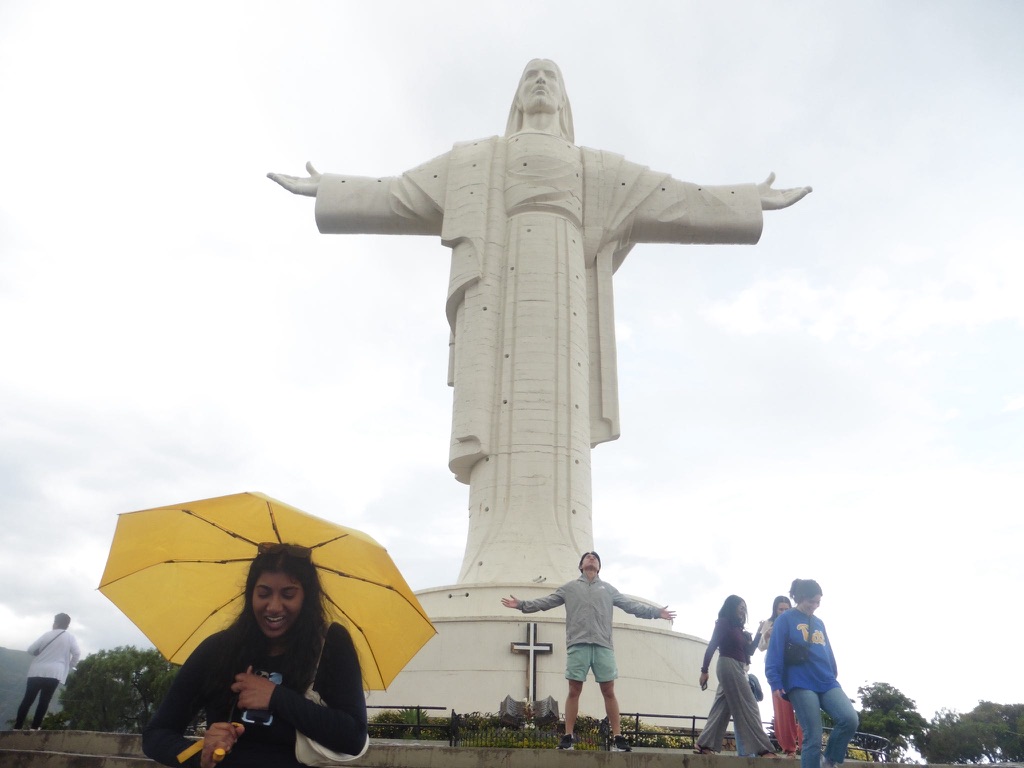


It’s pretty wild that we are at the end of this project. It seems like it was just yesterday that we were preparing for our on-site visit, and it is hard to believe how fast our time together has flown by. When we began this project at the start of this semester, I could never have imagined how much growth my team and I would experience, the impact the project would have on our group as well as the people we were serving, how close our team would become, and the true relationships that I personally formed. Having the chance to work on-site at CEOLI, experiencing the amazing culture and natural beauty of Cochabamba, and forming such deep and true relationships with the other students in my team is something that I am so truly grateful for and will cherish forever.
A key lesson that I learned from this trip was the importance of discomfort, as emphasized in “Points of Discomfort. Personally, this trip took me out of my comfort zone. I am not great at speaking up in a group setting or really cementing myself in a group, and this project demanded that each student act on their own accord, and to ensure that they were playing their part for something more significant than simply earning a letter grade. I feel that I was held accountable by each of my group mates, and I’ve never truly felt so enthusiastic about being as helpful and impactful as I can be than I have while working on this project. After going on site in Cochabamba, recognizing how significant an impact that we can have on these kids and the mission of those working for CEOLI inspired me to do as much outreach/work for the group as I possibly could. It didn’t matter how uncomfortable I felt, whether it be during our time in Bolivia, any meeting or presentation we had, or in any contact I may have had with an organization which we reached out to, every bit of progress which took us closer towards our goal of making a difference was so truly worth it, and I believe I grew not only as a teammate and a student from it, but also as a person. In all honesty, when our team first met, I realized that pretty much every person seemed like they knew way more about what they were doing, and seemed so much more confident in their abilities to contribute to the project. Hence, I made it my goal to just try to blend in and just get a good grade on the project. I attended all the meetings, did as I was told, and spoke when talked to. By doing this, I was never able to truly bond with the people in my team or have the impact I wished to have. It was not until we traveled to Bolivia, and I was able to experience things first hand did I realized that my discomfort could be put to the side in order to have an impact on something bigger than myself. I began speaking my mind, showing my true personality, and reaching out to organizations and almost anyone I knew that I believed could help. This truly paid off, especially when we were able to foster a connection between the Aquatic Therapy Foundation and CEOLI.
I believe this ties into the second key lesson I learned, which was the true importance of effective teamwork. In our discussion about “Principles of Effective Project Team Management”, we emphasized the importance of open communication, accountability, and task distribution. This became ever clearer as our project progressed, mainly due to the necessity of spreading out our tasks as we sought to achieve our deliverables. Being open and clear about who was working on what allowed our group to have a more balanced and widespread impact, and open communication was key to enabling our team to go above and beyond. The roots fundraiser, the GoFundMe, contacting professional organizations, people working on the midterm reports and presentations, the Zoom meetings, contacting organizations at Pitt, etc. All of this would not have been possible without people holding each other accountable, people being self-starters, and being open and honest about what was working, what people liked/didn’t like, and being willing to put preferences aside for the better of the group. All in all, I believe our team did an incredible job, and the amazing progress which we were able to accomplish was a testament to that.
One transferable skill, which I believe was the most crucial for this trip, was adaptability. I would genuinely say that our entire project has been based on being adaptable. Responding and moving on from rejection, working through failure, misconceptions, and, as I touched upon earlier, working through discomfort, have all been extremely important as we worked through this semester. Especially during our actual trip, adaptability was extremely important. Beginning with the travel, the 4 flights both ways, with extremely long layovers, through 4 different countries, were bound to cause issues. Whether it be group members getting sick, issues with flights or customs, or just travel fatigue, our travel there and back was definitely something that pushed our patience, but I am so proud of our group for doing so well despite all the challenges we faced. In the country, the language barrier, cultural differences, and especially sickness, also required us to be flexible and understanding. Adaptability, in my opinion, is one of the most important skills not only for future professional life, but for life in general. In my life, most things won’t go as planned, but it is up to you how you decide to react to these challenges. Our time both in country and throughout the duration of this project was a testament to the importance of flexibility as we take on this journey that is life.
In terms of relationships and the effects these held on the program, the great relationship between the University of Pittsburgh and CEOLI provided almost solely positive effects. There was a sense of trust and understanding between our groups, and we were greeted with so much welcome and openness. Our trip was so organized, meetings and communication were very efficient, and overall, we encountered very few issues. The only negative I would say it had for the group deliverables was that our original understanding of what CEOLI needed was very different from what we were told by Ron. It wasn’t a big problem, but it seems that the University had formed a very different understanding of CEOLI’s needs than what they actually wanted. Continuing with the project definitely allowed us to form a stronger relationship, especially when we were able to meet them in person as opposed to just talking to them over Zoom.
If I were to explain this project in a professional interview, I would pitch it as working as a consultant for an international nonprofit, specializing in education and healthcare for patients with Down syndrome and other disabilities. I would talk about how our team was able to manage a complete consulting engagement, building a network of organizational partnerships throughout the University of Pittsburgh, and also throughout the rest of the United States, while also raising over $3,000 for the organization. I would also touch upon our experience in the country, and talk about how it changed our understanding of certain aspects and shifted our focus in certain aspects of the project.
If I were to touch upon the three most important things for future groups, I would say that the most important thing is to establish a good relationship with your team as soon as possible. Having open communication and defined roles within the group leads to reduced tension and clearer instructions about who is to do what, but it also makes it so everyone is held accountable. And while it is natural for some to pull more weight, and for others to be more shy, really getting to know each other and working to everyone’s strengths will be super beneficial for the overall success of the group. Second, stay patient and do not get deterred by failure. Especially when it comes to reaching out to different professional organizations seeking to fill your deliverables, more often than not, you will be met with rejection. It wasn’t until our final 2 weeks of our work that I was able to finally receive a proper response and begin building a long-term connection. It takes a lot to even begin building this connection, so don’t get deterred if you’re not seeing results in the beginning. Last, I would emphasize the importance of being as useful as you can be in terms of helping others. This class and project are not simply a fun trip to Bolivia with a little bit of work added on. This project requires those involved to be very proactive, and challenges you to work and think in ways you may have never had to before. Be open to change, and remember that your work can have a real impact.
All in all, I am so incredibly grateful that I chose to do this program. The amazing people I met, the great experiences we had, and the lessons I learned are something I will cherish forever.