


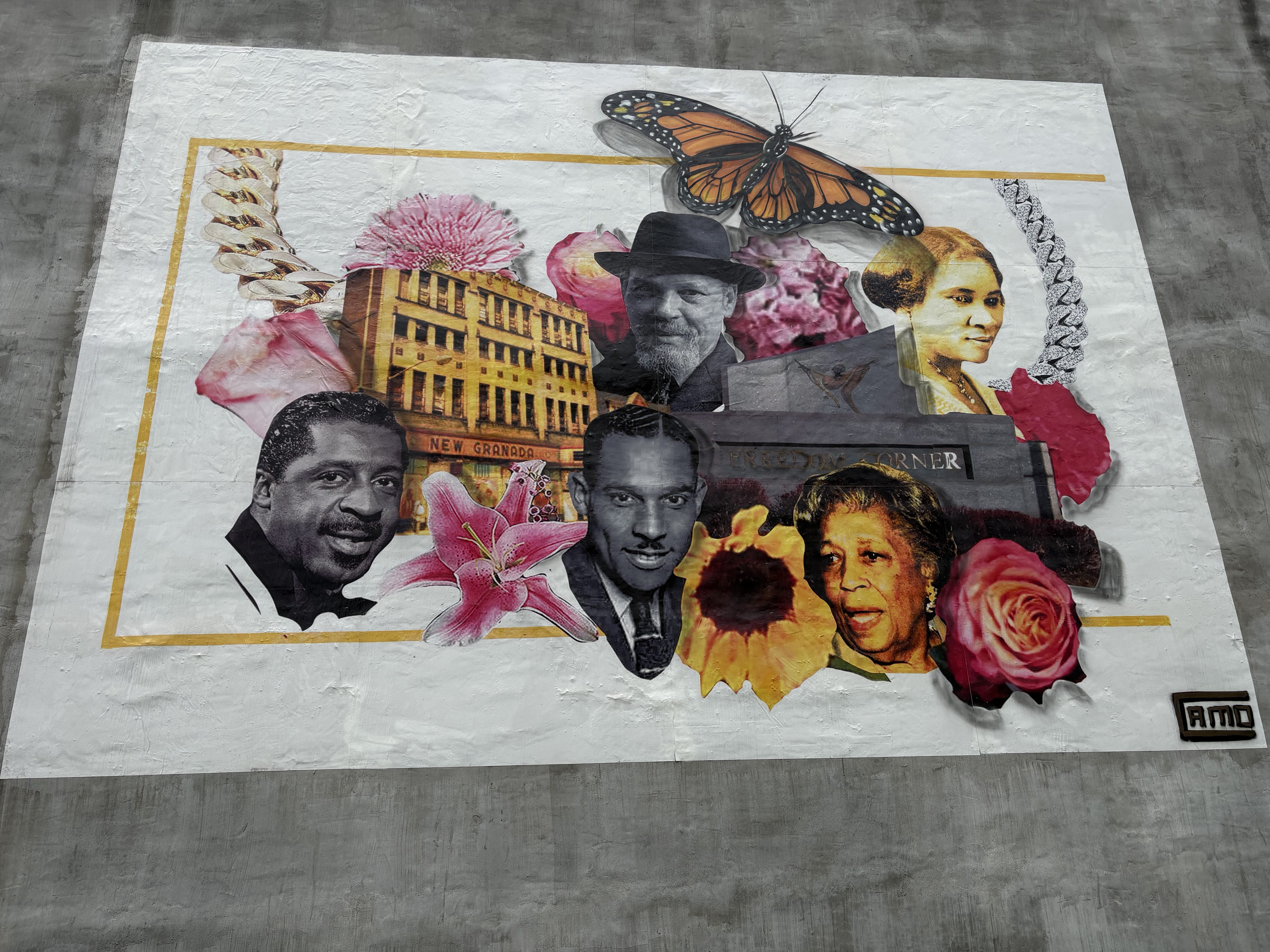
The entire Haller Global Fellowship Program group had the pleasure of a tour of Pittsburgh’s Hill District by Terri Baltimore today. Terri is a critical member of the Hill District’s community, having worked to improve and maintain the Hill for over forty years! As someone who hasn’t been to most districts of Pittsburgh, I had never been to Hill District before and didn’t know any background information about it. For the tour, we drove around the district as she told us a lot about the history that shaped its various landmarks and features. It was clear to me Hill District has had a lot of ups and downs over the years, and I felt the tour was the perfect introduction to the area as someone from outside of Pittsburgh.

One of the key takeaways that I got from the tour was that ventures in a community need to give back to said community. Each attempt to succeed in an area like the Hill District needs to take into account what it’s doing for the community, and additionally must act as part of that community. There’s been several times where good things in the Hill District got stopped short due to outside influences coming into the Hill District and refusing to work alongside the community. One such example is with the Pittsburgh Penguins’ former ownership of the Lower Hill District. In order to build the PPG Paints Arena, the current stadium used by many Pittsburgh sports teams, the Penguins obtained exclusive development rights to a 28-acre area of the Lower Hill District, with agreements requiring them to use much of that land to fill various niches within the community and provide social good. Suffice to say, the Penguins have not fulfilled these duties. When the rights were transferred back to community organizations of the Hill District due to this, only a little over 21 of the 28 acres were developed. The businesses that do succeed in the Hill District are in tune with the community around them and sensitive to the needs of its residents.
There is beauty in the Hill District, and an interconnected, resilient community, shown clearly by the history told to us by someone who lived through it all. To thrive, a neighborhood needs these things, but also businesses which accurately reflect the community that they’re for. Places like overpriced grocery stores with limited selections and luxury housing are not what the Hill District needs. By making community-minded decisions, businesses can become staples of the Hill, but they need to adapt themselves to it, not try to change the energy around them.


